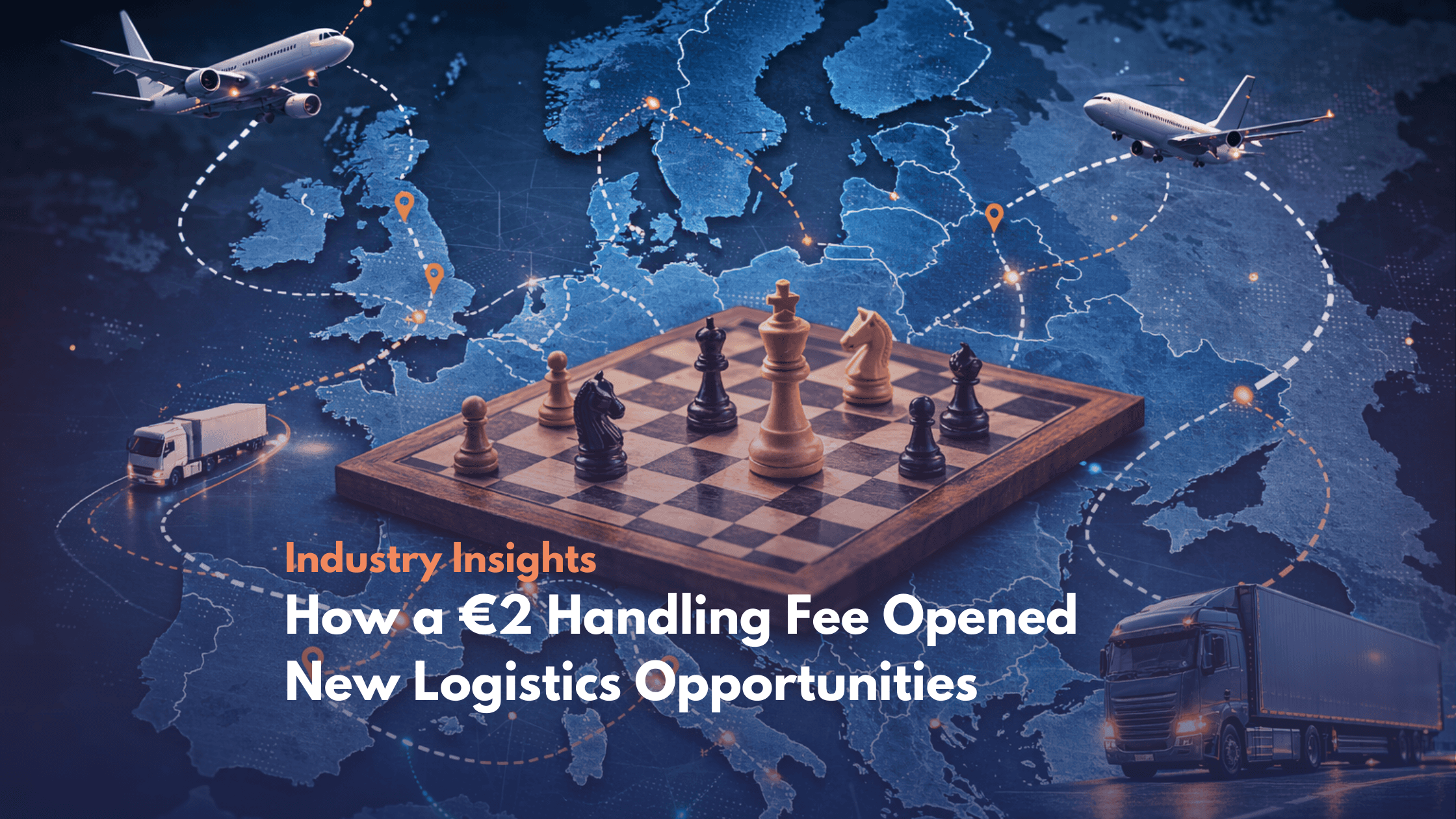
How a €2 Handling Fee Opened New Logistics Opportunities
|
5
min read
Share It On:
At the start of 2026, Italy introduced a €2 charge on parcels valued under €150 arriving from countries outside the European Union. The policy was designed to address the rapid growth of low-cost imports sold through global e-commerce platforms and delivered directly to consumers.
The Italian government aimed to achieve two main objectives. First, the fee was intended to create fairer competition for domestic retailers who face growing pressure from extremely cheap imports. Second, it was expected to generate additional revenue from the hundreds of millions of low-value parcels entering the country each year.
However, the logistics sector responded fast, and in a way policymakers had not fully anticipated.
Supply Chains Seek Alternatives
Rather than absorbing the additional cost, many logistics operators simply adjusted their supply chain routes.
Shipments that would normally arrive at Italian airports or logistics hubs began entering the European Union through alternative countries instead. Once parcels clear customs in any EU member state, they can circulate freely across the single market without further border checks.
This fundamental principle of the EU market makes rerouting relatively easy. Cargo flights can land in another EU country where no similar fee applies, after which parcels continue their journey to Italy via road transport.
The result is not necessarily a reduction in imports, but a shift in where those imports first enter the EU.
A Wider European Challenge
Italy’s experience reflects a broader issue facing policymakers across Europe. The number of low-value e-commerce shipments entering the EU has grown dramatically in recent years, reaching billions of parcels annually. A significant share of these shipments originate from Asian online marketplaces offering very low prices and direct-to-consumer delivery models.
In response, several EU countries have considered introducing their own national handling charges on small parcels. Yet when such measures are implemented independently, they can unintentionally distort logistics flows across the single market.
Because supply chains are highly optimized, even small regulatory differences between countries can influence where goods enter the EU. Logistics operators naturally choose routes that minimize additional costs and administrative complexity.
Why Digital Customs Infrastructure Matters
As governments introduce new rules to manage the surge of e-commerce imports, the operational burden increasingly falls on logistics providers, freight forwarders and customs brokers. Handling large volumes of small parcels requires accurate data, transparency and the ability to respond quickly to regulatory changes.
At x7trade, we support businesses by providing:
Automated ENS and H7 declaration submissions
Real-time regulatory and system updates
Streamlined workflows designed to reduce manual errors and administrative workload
As European customs rules continue to evolve, digital compliance solutions will be key to keeping cross-border trade running smoothly.
If you’d like to see how x7trade can support your operations and prepare your business for upcoming EU customs changes, book a demo today!