Low-Value Parcels Under Pressure: The EU’s New €3 Duty
|
5
min read
Share It On:
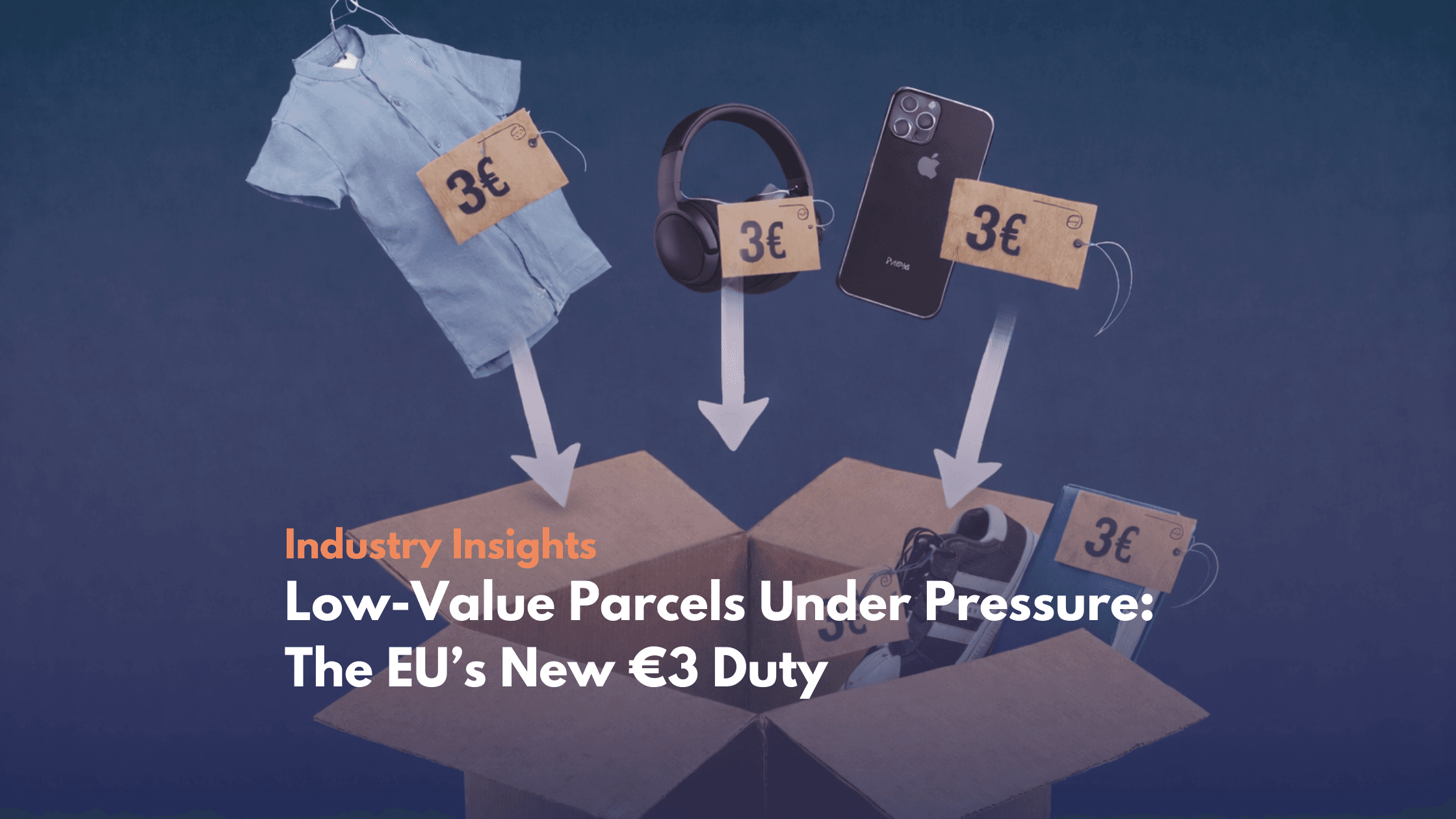
The European Union is preparing another major change to how low-value e-commerce imports are handled. As part of the broader EU Customs Reform, Member States have agreed in principle to introduce a fixed €3 customs duty on low-value parcels (under €150), marking a shift away from long-standing exemptions for small shipments entering the EU.
Based on the information currently available and discussions at EU level, the duty is expected to apply from July 2026 and would be charged per product type based on tariff classification. It is intended as an interim measure, covering the vast majority of parcels imported under the IOSS framework, and would apply ahead of a more comprehensive overhaul of EU customs rules planned for 2028. However, final details remain subject to confirmation and may evolve as the EU Customs Reform progresses, with discussions also ongoing around a separate e-commerce handling fee.
Why the EU Is Introducing a €3 Duty
Low-value parcels have long benefited from simplified customs treatment, allowing billions of shipments to enter the EU with minimal duties. Today, this model is under increasing strain:
The EU received over 4.6 billion parcels in 2024
A significant share of low-value shipments are undervalued or misdeclared
European retailers face unequal competition
Customs authorities face rising inspection volumes and enforcement challenges
The €3 duty is intended to ensure that customs duties are paid from the first euro, helping level the playing field while supporting customs operations.
How the €3 Duty Is Applied
An important detail is how the €3 duty is calculated.
The duty is not charged once per parcel, but per different product type contained in a shipment. In customs terms, this means it is applied per tariff heading (HS code).
For example:
A parcel containing several units of the same product will generally incur the €3 duty once
A parcel containing different products with different HS codes may incur the duty multiple times
This approach places greater importance on accurate product descriptions and HS classification, especially for mixed or bundled shipments.
€3 Duty vs €2 Handling Fee: A Key Distinction
The €3 duty should not be confused with the EU’s planned e-commerce handling fee.
The €3 duty is a customs duty, linked to product classification and import taxation
The handling fee (currently discussed at €2) is a separate administrative charge intended to cover the cost of processing high volumes of parcels
Depending on implementation timelines, businesses may need to manage both charges in parallel, making clarity and data accuracy essential.
What This Means for H7 Declarations
Low-value e-commerce parcels are typically declared using the H7 simplified customs declaration. As duties begin to apply to every parcel (and potentially to multiple items within a single shipment) H7 filings will need to carry more precise, structured data, including correct HS codes.
How x7trade Helps
As customs requirements evolve, automation becomes critical. x7trade supports H7 declarations at scale, helping businesses:
Capture and validate product data accurately
Submit compliant H7 declarations efficiently
Reduce errors, delays and manual intervention
With low-value parcels moving from “simplified” to “fully accountable,” x7trade helps ensure your operations remain compliant, efficient and future-ready.